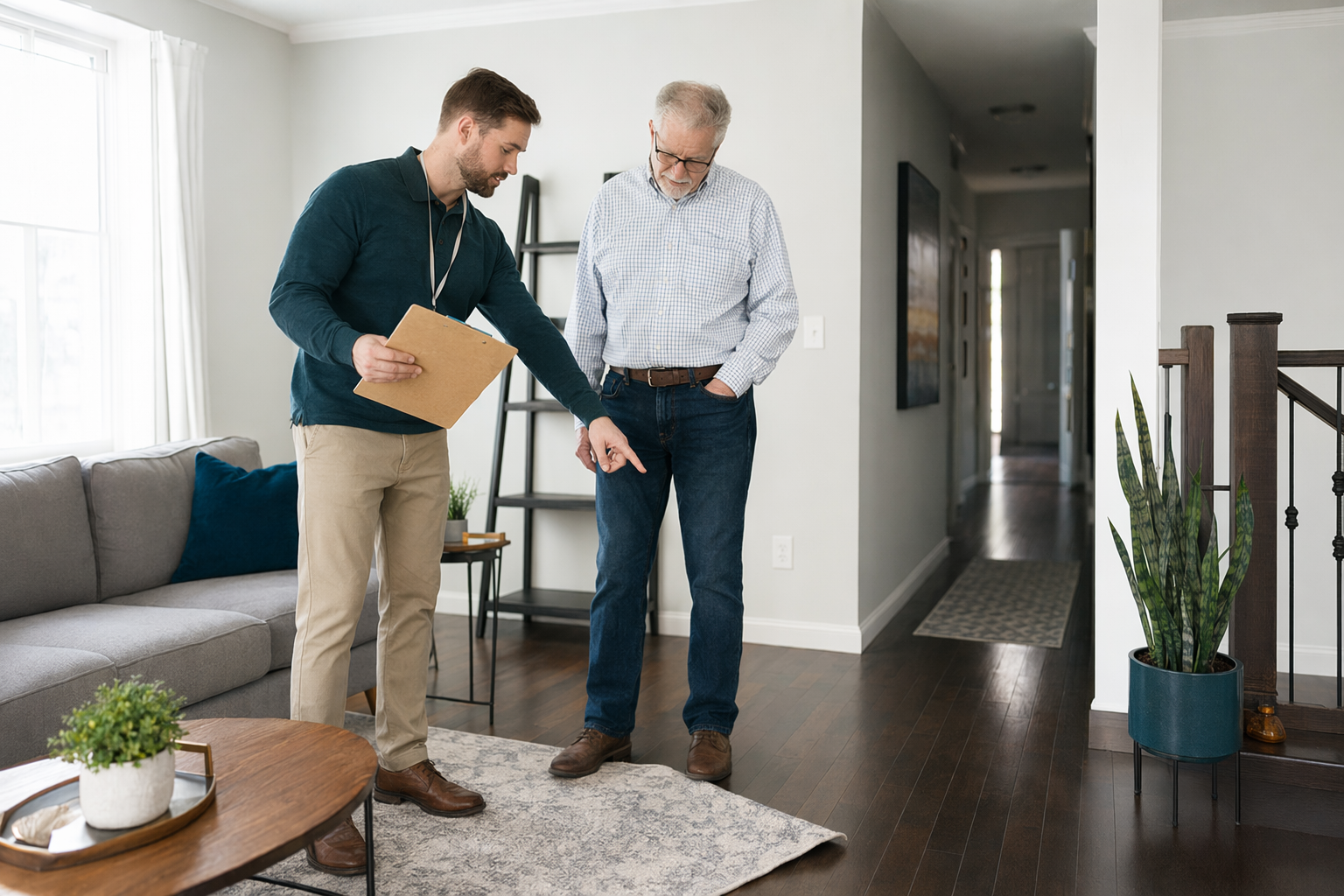
Why a home safety check matters
Many families notice small changes before a fall happens. A parent may hold onto furniture, avoid stairs, or feel less steady getting in and out of the bathroom. These moments can feel worrying, especially if you are trying to help from a distance.
A home safety check gives you a calm place to start. It will not prevent every problem, and it is not medical advice. But it can help you notice hazards, make practical changes, and prepare for a better conversation with a licensed clinician if needed.
Needs can change over time. What feels safe today may need to be updated after an illness, a hospital stay, or a change in strength, balance, vision, or memory.

How to use this checklist
Walk through the home one area at a time. If possible, do it in daylight and again in the evening with the lights on. Look for places where the older adult could trip, slip, rush, or lose balance.
You do not need to fix everything in one day. Start with the biggest concerns first, especially lighting, loose rugs, stairs, and bathroom safety. Small changes can make everyday movement easier.
If your loved one has had a recent fall, seems newly confused, or looks unsteady, talk to a licensed clinician. If you are looking for support for an aging parent, we can also help you find geriatric care or get matched with a nearby clinic.
Room-by-room home safety checklist
Use these questions as a practical guide as you move through the home.
Entryways and hallways: Are walkways clear of shoes, boxes, cords, and small furniture? Is there good lighting at the front door, in halls, and near steps? Are railings sturdy and easy to hold?
Living room and bedroom: Are rugs secured or removed if they slide? Is there a clear path between bed, chair, and bathroom? Are commonly used items easy to reach without climbing or stretching? Is there a lamp within easy reach of the bed?
Bathroom: Is the floor kept dry? Are there non-slip mats or other traction on wet surfaces? Is it easy to get on and off the toilet and in and out of the shower or tub? Are towels and soap easy to reach without bending or twisting?
Kitchen: Are everyday dishes, cups, and food stored at waist or shoulder level? Is the floor free of spills, clutter, and loose mats? Is there enough light over counters and the stove? Is a step stool being used, and if so, could items be moved to avoid climbing?
Stairs and outdoor areas: Are steps even and well lit? Are handrails present and secure? Are porches, walkways, and driveways free of ice, leaves, cracked surfaces, or other tripping hazards? Is the home entrance easy to use in bad weather?
Other things families often overlook
Footwear matters. Shoes that slide, backs that slip off, or socks on smooth floors can raise fall risk. So can pets underfoot, clutter near favorite chairs, and rushed trips to the bathroom at night.
Vision and hearing changes can also affect safety. If an older adult is squinting, missing steps, or not noticing hazards, it may help to talk to a licensed clinician and ask what kind of evaluation makes sense.
Some families also notice changes in strength, balance, memory, or confidence. If daily tasks are getting harder, our guides can help you understand common care needs in plain language. If you want help finding local support, we can connect you with a geriatric care clinic.
When to ask for extra support
A checklist is helpful, but it is only one part of the picture. If your loved one has fallen, nearly fallen, seems weaker than usual, or is avoiding normal activities because they feel unsafe, it is time to talk to a licensed clinician.
A clinician can look at the full situation, including mobility, home setup, and overall health. Care decisions should stay between your family, the older adult, and a licensed clinician.
If you are not sure where to begin, Everwell Geriatrics is a free matching service. We help families find geriatric care clinics near them. We are not a medical provider, and we do not give medical advice.

General information, written and reviewed for plain-language clarity — not medical advice.
General information, written and reviewed for plain-language clarity — not medical advice.