Why home safety matters
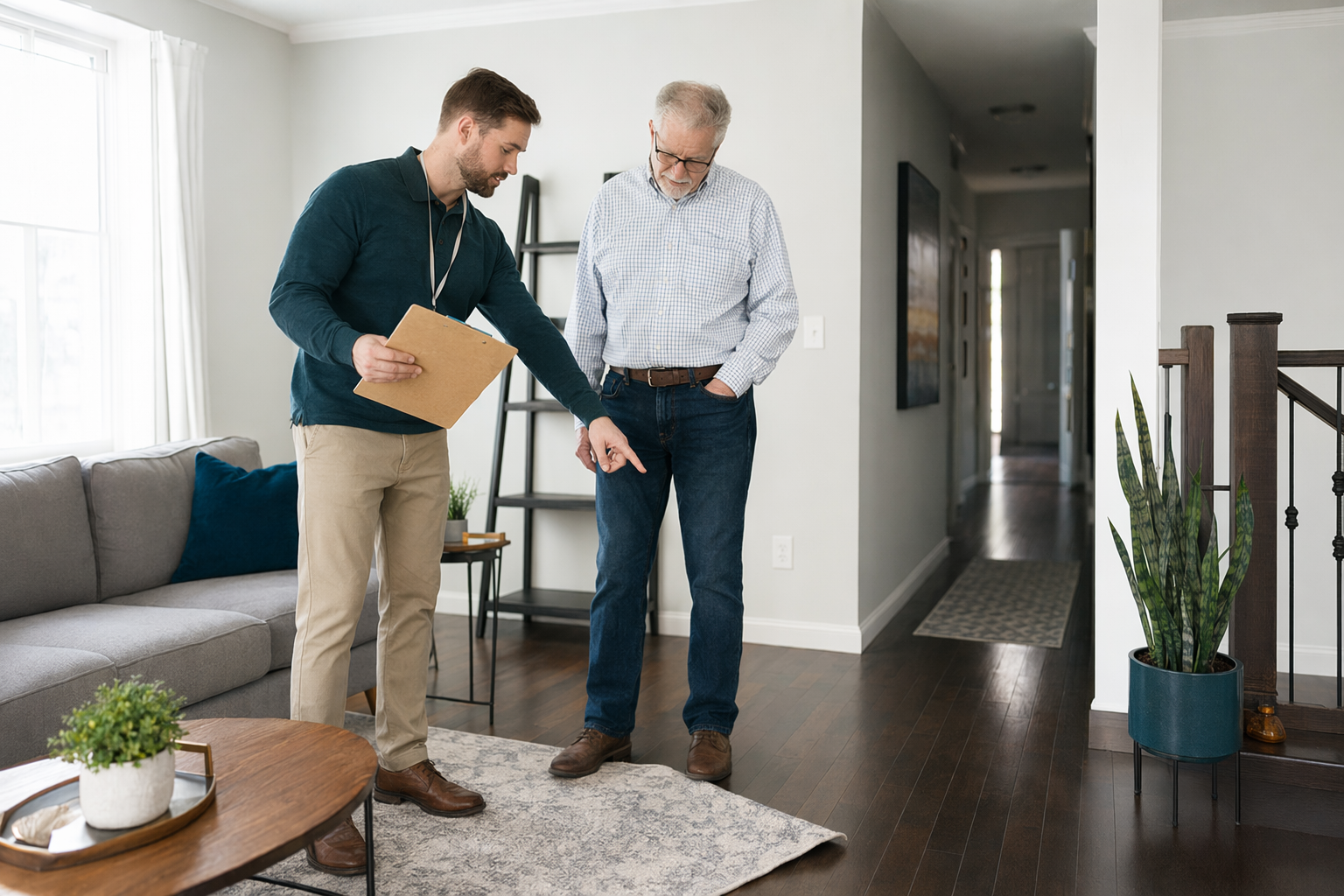
As people age, small things in the home can become bigger risks. A loose rug, dim hallway, steep stairs, or cluttered path can make it harder to move around safely.
If you are caring for an older parent or loved one, it is normal to feel worried. You may not know where to start, especially if your family is balancing work, language barriers, or a move to a new state. A geriatric care clinic can help talk through safety concerns with the older adult and the family, then suggest practical next steps.
We do not give medical advice. We help you find a clinic where a licensed clinician can look at the bigger picture and discuss safety in a way that fits the person’s needs.
Common low-cost changes families often consider
Many home safety changes are simple and low cost. They may help reduce everyday hazards and make the home easier to use.
Start with the places where falls are most likely: entryways, bathrooms, stairways, and walking paths. Good lighting, clear floors, grab bars, non-slip mats, and sturdy handrails are common examples families ask about.
It can also help to think about what is used every day. Are glasses, phones, and frequently used items easy to reach? Is there a chair with strong arms for standing up? Small changes like these can make routines easier without a full home remodel.
- Keep walkways clear of cords, shoes, and clutter
- Use brighter lighting in halls, stairs, and bathrooms
- Check that rugs, mats, and cords do not slide or curl up
- Make sure often-used items are easy to reach without climbing or stretching
How a geriatric fall-risk assessment can help
A fall-risk assessment is one part of care that some geriatric clinics offer or discuss. It is not about scoring the home or judging a family. It is about understanding where someone may need more support and what changes may help in daily life.
The clinic may ask about mobility, balance, vision, daily routines, and the home setup. Then they can help the family think through a practical plan. That plan might include home changes, tools for daily living, or other supports the licensed clinician thinks are appropriate.
Because programs and clinic services vary by state and community, it helps to ask what each clinic offers. Get matched if you want help finding a clinic near you.
What to ask when you talk with a clinic
When you contact a clinic, you do not need to prepare a long medical summary. We only ask for contact details and a short description of the care you are looking for.
You can say something simple like: “I am helping my parent stay safer at home. We would like help from a geriatric care clinic near us.” That is enough to begin.
If you speak with a clinic, you can ask what kinds of safety reviews they offer, whether they help families think through home changes, and what costs or coverage questions you should ask the clinic directly. We are not affiliated with Medicare or any plan, and we do not enroll anyone.
- Ask what the clinic can help with at home
- Ask whether they can talk with the older adult and family together
- Ask what to bring to the visit or call
- Ask the clinic about costs and coverage
How Everwell Geriatrics can help
Everwell Geriatrics is a free matching and guide service for families in the U.S. We help you find geriatric care clinics near you, so you do not have to search alone.
You tell us how to reach you and share a short description of the kind of help you want. Then we connect you with a clinic that fits your location and care needs. We do not collect medical history, diagnoses, medications, or insurance account numbers.
If you want to learn more first, you can browse our guides or read about care. When you are ready, we can help you get matched.
A gentle next step for families
Home safety can feel emotional because it is tied to independence, memory, and family worry. You do not have to solve everything at once.
A small first step can be enough: notice one room, one hazard, or one question you want to ask a clinic. From there, a licensed clinician can talk with you and the older adult about the best next steps.
If your family is new to the U.S. or prefers simple English, that is okay. We aim to make the process easier to understand, with clear language and no cost to you.
General information, written and reviewed for plain-language clarity — not medical advice.